

Negative gearing changes: what changes on 1 July 2027 and who is affected?
By Anthony Simon. Last reviewed 13 November 2026. 4 minute read.
From 1 July 2027, negative gearing on residential property is limited to new builds. If you buy an established home as an investment after 7:30pm AEST on 12 May 2026, a rental loss on it can no longer reduce the tax on your wages. That loss can only be used against income from residential property, and any unused part carries forward to later years; properties you held before that time keep the current rules.
Key points
This is now law, not a proposal. The ATO confirms the measures are now law.
It starts on 1 July 2027.
Investment properties held before 7:30pm AEST on 12 May 2026 are exempt.
New builds can still be negatively geared, before and after 1 July 2027.
For established homes bought after the cut-off, a rental loss can be used against other residential property income, including capital gains, and carried forward. It cannot be used against wages.
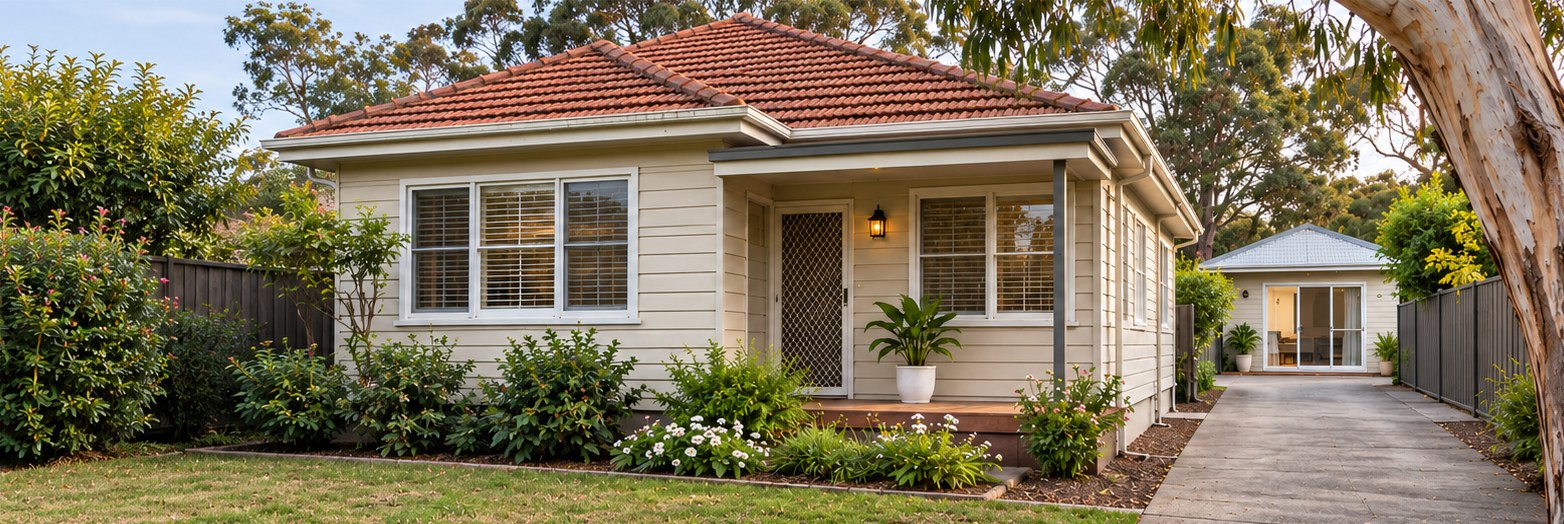
Illustration: an established house with a granny flat at the rear of the block.
Many people are hearing that negative gearing is gone and stopping there. It isn't gone. What has changed is which properties it applies to, and what a loss can be used against.
Anthony Simon
Who is affected and who is not
Not affected | Affected |
|---|---|
You held the investment property before 7:30pm AEST on 12 May 2026 | You buy an established home as an investment after that time |
You buy a new build, before or after 1 July 2027 | You were counting on a rental loss to reduce the tax on your wages from 1 July 2027 |
What the rule says
The change was announced in the Federal Budget on 12 May 2026 and passed by Parliament in June 2026 as the Treasury Laws Amendment (Tax Reform No. 1) Act 2026. The ATO's summary confirms it is law and applies from 1 July 2027.
Treasury's Budget 2026-27 page sets out how it works. Investors who buy established housing after 12 May 2026 can deduct losses against other income from residential properties, including capital gains, and can carry excess losses forward. They cannot deduct those losses against non-residential income such as wages.
In plain terms, the loss is not lost (many think it is). It is kept in a separate bucket that only residential property income can use. In other words, they are 'kicking the loss bucket down the road'.
What is the government still working through?
The rules say new builds are exempt, so the definition of a new build matters. The detailed definition of a "new residential dwelling" is in a second piece of legislation, the Tax Reform No. 3 Bill, which is still before the Senate. I cover what that means for granny flats and duplexes in Does a granny flat or duplex count as a new build under the negative gearing changes? For the 24 month rule, including when a home that is already built still counts as new, see What counts as a new build for negative gearing?.
What I've done for years is look for deals that stand up on the rent, usually with two incomes on the one block. A deal like that was never relying on a tax loss to work.
Anthony Simon
What to ask your accountant
Which of my properties were held before 7:30pm AEST on 12 May 2026, and how is that date tested if my contract and settlement fell either side of it?
If I buy an established property now, what happens to a rental loss on it from 1 July 2027?
Do I have other residential property income that a loss could be used against?
If I build, or buy something newly built, will it count as a new build under the final rules?
How do the capital gains tax changes from 1 July 2027 fit with this for my situation?
Questions people ask
Is negative gearing being abolished?
No. From 1 July 2027 it is limited to new builds for residential property. Properties held before 7:30pm AEST on 12 May 2026 keep the current treatment.
Does this affect the investment property I already own?
Not if you held it before 7:30pm AEST on 12 May 2026. Those properties are exempt from the change.
What happens to a rental loss I can't use against my wages?
It can be used against other income from residential properties, including capital gains. Any excess carries forward to future years.
Can I still negatively gear a new build?
Yes. New builds can be negatively geared before and after 1 July 2027. The detailed definition of a new build is still before Parliament.
When do the changes start?
1 July 2027. The cut-off for which properties are covered is 7:30pm AEST on 12 May 2026, the time of the Budget announcement.
Anthony Simon is a Sydney property investor and the founder of Real Estate Mentor Club. About Anthony
Watch the free session, The $100,000 Decision. Start here
General education only. This article is not financial, tax, legal, credit or planning advice. Tax rules depend on your circumstances, so speak to a registered tax agent before acting.
Sources
ATO: Reforming negative gearing and capital gains tax (checked 13 November 2026)
Treasury: Budget 2026-27 tax system changes (checked 13 November 2026)
Budget 2026-27 tax explainer: Negative Gearing and Capital Gains Tax Reform (checked 13 November 2026)
