
Does a granny flat or duplex count as a new build under the negative gearing changes?
By Anthony Simon. Last reviewed 14 November 2026. 6 minute read.
A duplex that replaces a single house is on the government's list of eligible new builds. A granny flat is treated as part of the house it sits with, so it only gets negative gearing if the house does. The definition is in a bill that has passed the House of Representatives but not the Senate, so check where it stands before you sign anything.
Key points
The negative gearing and capital gains tax changes are law and start on 1 July 2027.
Property you held at 7:30pm on 12 May 2026 keeps its current treatment.
A duplex that replaces one house is listed as an eligible new build. One house replaced by one house is not.
A granny flat follows the house it sits with.
The definition of a new build is in a bill that was still before the Senate on 14 November 2026.
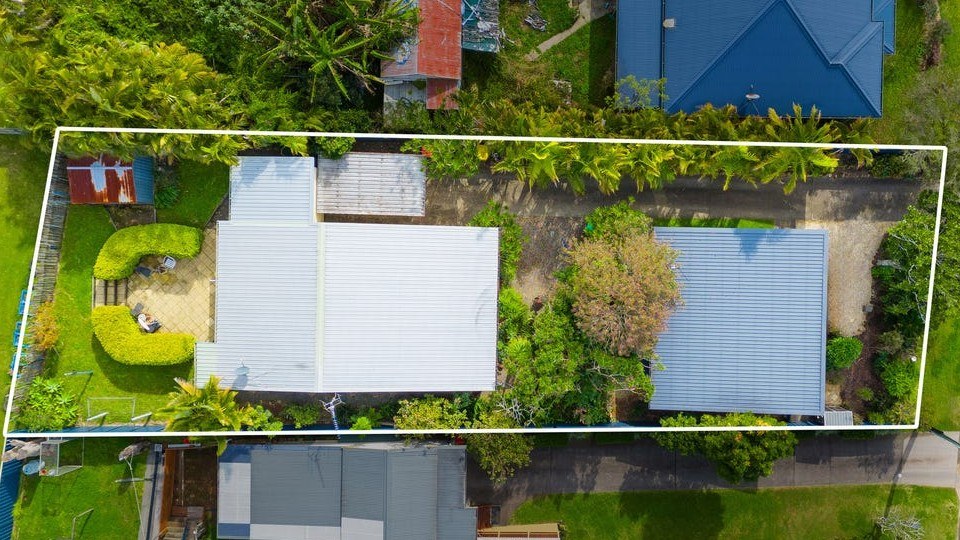
The joint venture deal described below: a house and a separate cottage on one lot in regional NSW.
A lot of people are asking me this, so I went and read what the government has actually published; which was not the most exciting read!
What changed, and is it law?
Yes, it is law. The ATO confirms the changes announced in the budget on 12 May 2026 have passed and start on 1 July 2027 (ATO, updated 29 June 2026).
From that date, negative gearing on residential property is limited to new builds. If you buy an established place now and it runs at a loss, that loss no longer comes off the tax on your wage. As I understand it, the loss carries forward against future property income or gains.
If you owned the property at 7:30pm on 12 May 2026, none of this touches that property for as long as you own and hold it.
Capital gains tax changes on the same date. The 50% discount goes. It is replaced by indexing your cost base for inflation, with a 30% minimum tax rate on the gain. That only applies to gains from 1 July 2027 onwards. At least there is still some allowance for inflation.
There is one piece still missing. The Act does not say what a "new residential dwelling" is. Treasury put a draft definition out for comment in August (Treasury consultation). The bill with the definition was introduced on 14 October and passed the House of Representatives on 29 October. As I write this, it is before the Senate, and a Senate committee reported on 13 November and recommended the bill be passed. So everything in the next section is what the bill proposes. It is not law yet. I explain the 24 month rule in What counts as a new build for negative gearing?
What counts as a new build?
The test is whether it adds a home that was not there before. The Treasurer told Parliament that means homes built on vacant land, or an existing home knocked down and replaced with more dwellings than were there (second reading speech).
The budget fact sheets gave examples. This is how Challenger summarised them. I have updated the last row to the 24 months now in the bill.
Listed as an eligible new build | Listed as not eligible |
|---|---|
A duplex built by knocking down one free-standing house | One house knocked down and replaced by one house |
Any home built on vacant land | An established home extended to add bedrooms |
A new apartment bought off the plan | A granny flat built beside an established property that is not itself eligible |
A new home bought within 24 months of its occupation certificate, from an owner it was new for | A home bought more than 24 months after its occupation certificate was issued |
So where does a granny flat fit? Treasury's draft treats a granny flat as part of the main house. You cannot buy one separately, so it gets whatever the house gets. If you owned the house before budget night, the house keeps negative gearing and so does a granny flat you add to it. If you buy an established house today and put a granny flat on it, the house is not a new build and neither is the granny flat.
Many people are asking me whether a granny flat gets them around the new rules. From what I have read, no. It goes with the house.
Anthony Simon
A duplex is different. Knock down one house and build two, and you have added a home. That is on the eligible list. Knock down one house and build one bigger house, and it is not.
What I showed our members this week
On Tuesday night I ran three real properties through the numbers for our members.
The first was an established house near Newcastle at around $900,000. On a $720,000 interest-only loan at 6.75%, it cost about $466 a week to hold before tax. The second was a brand new house at $1.059 million. That one cost about $470 a week before tax. So before tax there is almost nothing between them.
In my experience a brand new house rarely grows as fast as an established one in its first five years. You pay a premium for new, and it is very hard to buy new under value. Let me know if you have experienced differently.
The third property had two dwellings on it. The gross yield was 6.16% and the net yield was 4.2%, against a net yield of 2.71% on the established house. The weekly shortfall was a lot smaller than on either single house.
How many properties can you fund that are actually costing you $300 a week?
Anthony Simon
What I am doing about it
I think the change pushes you to look at rent first and tax second. That is how I have been buying anyway.
This is one of my joint venture deals. It is in regional NSW, in the Port Macquarie-Hastings council area.
Purchase price, settled June 2026 | About $837,000 |
Rent across the two dwellings, about $51,500 a year | $990 a week |
Gross yield on the purchase price, before costs | About 6.2% |
The property | An existing three-bedroom house and a separate two-bedroom cottage on one lot |
Work | Small renovations. We built nothing |
The plan | Put each dwelling on its own title, sell the house and keep the cottage |
Agent's estimate once separately titled | $640,000 for the house and $510,000 for the cottage |
It is not a new build and I am not showing it as a tax example. I am showing it because two rents on one lot meant the property carried a lot more of its own cost from the day we settled.
What I have done on my recent deals is buy places that already had two dwellings on them, do a light reno and split the title. I want two rents coming in before I even think about tax.
Anthony Simon
A lot of the people I talk to are still doing their numbers the old way.
I will never buy and hold a property unless there is upside I can create, many call that manufactured growth!
Anthony Simon
Those figures are real and from one deal, as they stood in October 2026. The yield is gross, so it is before interest, rates, insurance, repairs and management. The agent's numbers are estimates, not valuations and not sale prices. They are not typical, not a forecast and not a promise of what you would get.
What I would ask my accountant and broker
I am not an accountant and this is not tax advice. These are the questions I would take to mine.
Was my property held, or under contract, before 7:30pm on 12 May 2026?
Has the definition of a new residential dwelling been finalised, and does my project meet it?
If I add a granny flat, how is it treated alongside the main house?
If my loss is carried forward, when could I use it?
How do the capital gains changes from 1 July 2027 apply when I sell?
For my broker, how does a lender work out what I can borrow without the tax benefit?
Questions people ask
Is negative gearing being abolished?
No. From 1 July 2027 it is limited to new builds for residential property. Property you held at 7:30pm on 12 May 2026 keeps its current treatment.
Can I negatively gear a granny flat?
Under Treasury's draft, a granny flat follows the house it sits with. If the house can be negatively geared, so can the granny flat. If it cannot, adding a granny flat does not change that.
Does a knock-down rebuild count as a new build?
One house replaced by one house is listed as not eligible. One house replaced by more dwellings, such as a duplex, is listed as eligible.
I bought before budget night. Am I affected?
The ATO says property held at the time of the announcement is exempt from the negative gearing changes. The capital gains tax changes apply to gains from 1 July 2027.
When will the definition of a new build be final?
It is in the Tax Reform No. 3 Bill, which passed the House of Representatives on 29 October 2026 and is now before the Senate. A Senate committee reported on 13 November 2026 and recommended the bill be passed. Check the ATO and Parliament pages for the current position.
Written by Anthony Simon, founder, Real Estate Mentor Club. Last reviewed 14 November 2026. About Anthony
New to Real Estate Mentor Club? See how the Club works and where to begin. Start here
General information only. This is education, not financial, tax, legal, credit or planning advice, and it does not take your circumstances into account. Tax law changes, and the definition of a new build was not final when this was written. Speak to a registered tax agent before you act. Real Estate Mentor Club is operated by Yellow Bricks Pty Ltd, ABN 35 622 654 602.
Sources
Australian Taxation Office: reforming negative gearing and capital gains tax (read in full 11 November 2026)
Treasury: Capital Gains Tax and Negative Gearing, tranche 2 consultation
Treasurer's second reading speech, Tax Reform No. 1 Bill 2026
Parliamentary Library: Bills Digest, Tax Reform No. 1 Bill 2026
Parliament of Australia: Tax Reform No. 3 Bill 2026, progress of the bill (checked 11 November 2026)
Parliamentary Library: Bills Digest, Tax Reform No. 3 Bill 2026 (read 11 November 2026)
